
LTV та довгострокова стратегія збереження клієнтів: шлях бізнесу до подолання залежності від одноразових угод

Almost every business is familiar with that feeling when the period closes and everything resets on the first of the month. Another empty funnel, the same cold leads again, another chase. A business built on one-off deals scales poorly. Sooner or later, such a model burns out both the team and the founders. It doesn’t matter the industry, whether it’s software sales, retail, or service provision.
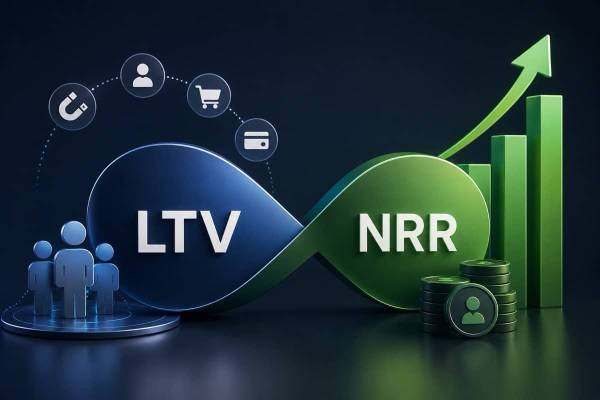
Retention Metrics
Instead of constantly attracting new clients, it’s worth shifting the focus to processes that begin immediately after the first payment. This refers to working with LTV (Lifetime Value) – a key metric that drives a company’s financial success.
LTV is the total value of a client over their entire lifetime, not just a single transaction. As soon as you start looking at this figure, everything changes: the product (you sell not a one-time action, but a result that needs ongoing support), the price (you can afford installments and flexible payment options), and even whom you acquire as a client. Because a “one-time” client and a “two-year” client cost the same effort to acquire and onboard, but bring in vastly different amounts of revenue.
Why You Shouldn’t Measure “Overall” LTV and How to Calculate It by Periods
Here lies a trap that most entrepreneurs fall into. When a company calculates one average LTV across its entire base over its entire existence, it gets a nice-looking number that doesn’t reflect the real state of affairs. It artificially mixes clients acquired three years ago with those who joined last month. Such a calculation combines the work of a strong account manager with the actions of a novice, as well as a burnt-out advertising channel with a new tool. This is the classic “average temperature in the hospital,” which is always late.
It’s much more accurate to calculate LTV by cohorts over a period: LTV of clients acquired in the first quarter, separately from the second; for the first half-year, separately from the second. Then, each new variable becomes visible.
Why Is This Important in Practice?
New Channel. After launching a new tool, such as a TikTok campaign or a partner ecosystem, it’s important to understand if it brings in a solvent audience. In the overall LTV indicator, these new clients will dissolve among the existing ones. Instead, the LTV of the cohort from this channel per quarter will immediately show whether clients stay for repeat purchases or drop off after the first transaction, making the Customer Acquisition Cost (CAC) unrecoverable.
New Manager. When hiring a sales manager or an account manager, you can honestly assess not just the volume of initial deals but the quality of acquired clients within six months. The LTV of their client cohort per quarter will show the real picture. Often, a manager closes many quick deals, but their clients leave en masse after two months. This is not noticeable in the overall figure but is well-revealed in cohort analysis.
Speed. There’s no need to wait for the client’s entire lifecycle to conclude to draw conclusions. It’s enough to compare cohorts at the same stage, for example, how much a client brought in on average by the 90th or 180th day. This allows for comparing acquisition channels and team performance on equal footing and making decisions within a quarter, not years.
Overall LTV is a metric for investor reports. LTV by period is a metric for management. The former tells you where you were. The latter – where and how you are moving.
A Few Numbers for Orientation
A healthy LTV to CAC ratio (cost of acquisition) is approximately 3:1; strong players maintain 4–5:1, and in e-commerce, 2–3:1 is often the norm.
According to HubSpot marketing reports, retaining an existing client costs a company on average five times less than acquiring a new one. At the same time, the probability of making a sale to a client who has already purchased from you is 60–70%, while for a new cold lead, this figure ranges from 5–20%. Also, a classic study by Bain & Company shows that increasing Customer Retention Rate by just 5% can increase company profits by 25–95%. Thus, systematic retention is not just an element of customer service but the most economically beneficial source of business growth.
Benchmarks for American industries. The average retention for B2B is about 72% (i.e., ~27% annual churn). But the spread is huge: SaaS and IT services maintain 88–90%, business consulting ~85% — there are high switching costs and deep relationships. Transactional e-commerce and retail operate at 38–62% — you practically have to win the customer back every time. You need to see where your industry falls within this range and honestly assess whether you are above or below the market.
Retention Starts Long Before the First Transaction
The most common management mistake is the belief that a retention strategy kicks in only when a client has already signed a contract or made a purchase. In reality, it begins at the pre-sale stage. The expectations you set during the initial negotiations or product presentation determine whether the client will be satisfied with your work six months later.
If you promise an ultra-fast result within a month to close the deal, you’ll either face exhausting work trying to meet the deadline or inevitable disappointment and client churn. An honest and transparent explanation of realistic timelines and risks builds long-term trust, so the client doesn’t panic in the early stages and is ready for systematic cooperation.
The first 90 days are particularly important. This is a critical onboarding window during which the client practically assesses the level of your service and makes an internal decision about their level of trust in your company.
Life Hacks for Different Business Models
Subscription and SaaS: The key task at the start is to get the user to the so-called “aha-moment” (the first practical and tangible result from using the product after registration) as quickly as possible. The next step is proactive Customer Success, whose task is to identify early signals of potential churn (e.g., a drop in user activity in the system) before the client submits a subscription cancellation request.
E-commerce / D2C: Here, the second sale is crucial. Post-purchase email flows, subscription for regular delivery of consumables, loyalty programs, personalized offers based on purchase history. The goal is to increase both frequency and average check, not just to pour in new traffic.
Services, Consulting, and B2B Segment: An effective strategy is to convert one-off projects into a retainer format (monthly service). It’s necessary to regularly demonstrate measurable interim results, conduct planned strategic meetings, and offer related services as upsells. For example, a one-off SEO audit can serve as an entry point to the sales funnel, while the main value is built on monthly support, where the client sees continuous dynamics and understands its dependence on systematic work.
And the simplest thing, which surprisingly few do systematically, is to regularly ask clients about their current affairs and business objectives, not when a crisis arises, but according to a clear internal procedure. For instance, we have this documented as an account manager’s duty. It is from such proactivity that additional sales and recommendations naturally arise.
Retention Metrics to Monitor
Churn Rate: the percentage of customers or recurring revenue that a company loses over a given period.
Retention Rate: the proportion of customers who remain with you at the end of the analyzed period.
NRR (Net Revenue Retention): one of the most telling business metrics. It shows how revenue from the existing customer base changes, taking into account contract expansions, cross-sales, and upsells minus losses from churn. If the NRR exceeds 100%, it means your business can grow steadily even without acquiring new clients by developing relationships with the current base. According to financial reports of leading technology companies, the best global SaaS products maintain an NRR of 120%+.
8 Steps to Building Long-Term Client Relationships
The main mistake that costs businesses too much is the pursuit of selling another isolated deal instead of managing relationships for years. Transactional thinking in the “close the deal, hand over the work, look for the next one” scheme brings quick money today but deprives the business of stability.
To break free from this chase, it’s worth implementing an internal client management algorithm that helps build a predictable and profitable model:
- Set realistic expectations during pre-sale: don’t promise the impossible for the sake of a quick contract signing.
- Ensure seamless client handover: the process of transitioning a client from sales to the actual performers and account managers should be quick and unnoticed by them.
- Invest maximally in the first 90 days: focus on quick wins and building trust at the start of the cooperation.
- Communicate systematically and on schedule: implement regular status calls and reports so the client always sees the progress of processes.
- Initiate planned feedback sessions: ask about satisfaction with the work and the client’s business context in advance, not when problems arise.
- Analyze needs for upsells: listen to the client not only to solve current tasks but also to identify new growth areas in their business where you can help.
- Make a referral program part of the service: systematically reward clients for recommendations, especially if they bring in long-term partners.
- Maintain client database and CRM flawlessly: no agreement, detail, or interaction history should be lost when managers change or the team scales.
Long-term business growth begins not with finding new clients, but with the ability to retain and develop relationships with those who have already trusted your company. If, instead of one-off deals, you build a system focused on LTV, retention, and NRR, not only the financial result changes, but also the business management model itself. It is companies that know how to turn the first purchase into a multi-year collaboration that gain the most stable competitive advantage and can scale without constantly chasing new leads.
<div